|
|
|
|


|
|
Bryan Titus
Appalachian Trail "Through Hiker"
"My
2,200 mile walk of the Appalachian Trail”
June 9, 2026
During the last regular session of the year on June
9 (with new meetings beginning in September), some 37 Y’s Men of Meriden
heard an illustrated talk by Bryan Titus about his 2013 through-hike of
the Appalachian Trail. This remarkable achievement began on Springer
Mountain in Georgia and concluded about six months later (after hiking
2200 miles) on Mt. Katahdin in Maine.
The 35 year old Titus started this adventure
accompanied by his wife Katie, but she was forced to drop out in
Tennessee following a leg fracture. The trail was marked about every 300
yards by unique white blazes from Georgia to Maine, mostly painted on
trees, but occasionally on large rocks or other structures. Titus
carried his tent, food and medical supplies in a backpack, but often was
able to sleep in maintained shelters; food was replenished about weekly
at small community stores. Food at night had to be carefully hung from a
tree branch to protect it from predators.
Visibility of the skyline was limited by heavy tree
growth and was best seen by climbing intermittent fire towers. The
Trail mostly consisted of a path through the terrain, but sometimes ran
over rock formations, across streams and even through towns. Wildlife
was abundant: herds of wild pigs (boars), butterflies, giant centipedes,
copperhead and rattlesnakes, deer, bears, wild ponies and ever-present
ticks (which required removal once or more daily).
Titus began the hike weighing 185 lbs., ending at
160 lbs. During the trek, his backpack weight dropped from about 43 lbs.
to 33 lbs. His slides showed an array of mountain laurel, wild
honeysuckle and rhododendron. The hike ended by traversing Maine’s
“100-mile wilderness” leading to Mt. Katahdin. Following this
presentation, Titus, a professional musician, then performed a song he
had written, spurred by recollections of the Appalachian Trail
experience.

The beginning of the trail at Amicalola Falls State Park.
The official beginning is at the top of Springer Mountain about 9
miles from there.
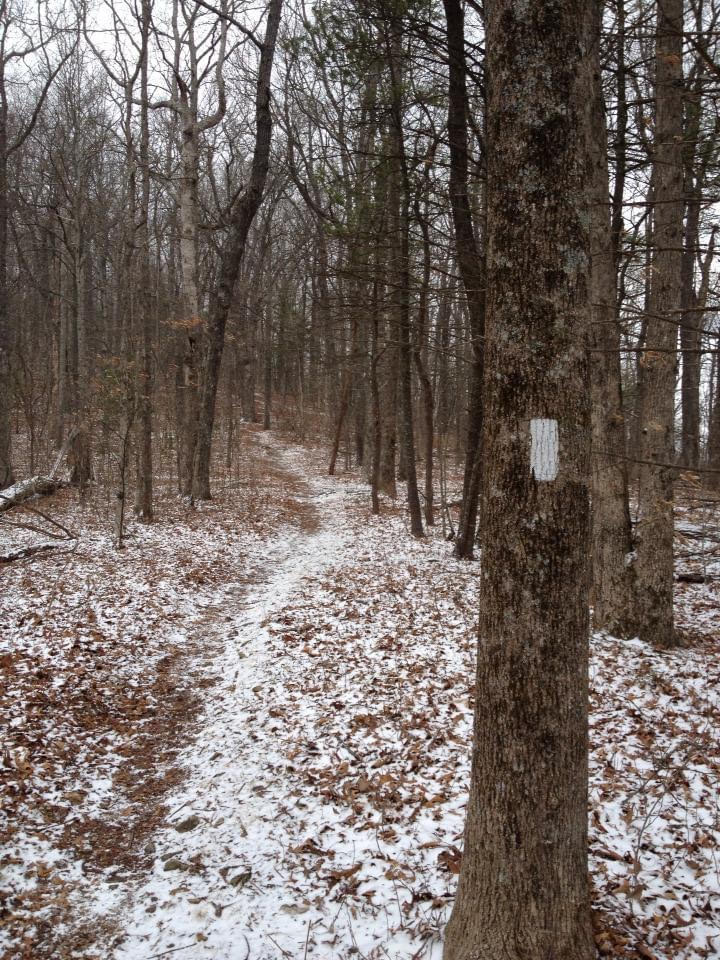
Even in Georgia there is snow in the mountains in March!
The Appalachian Trail is marked by signature white paint “blazes” every
200 feet or so.
They stretch all the way to Maine!
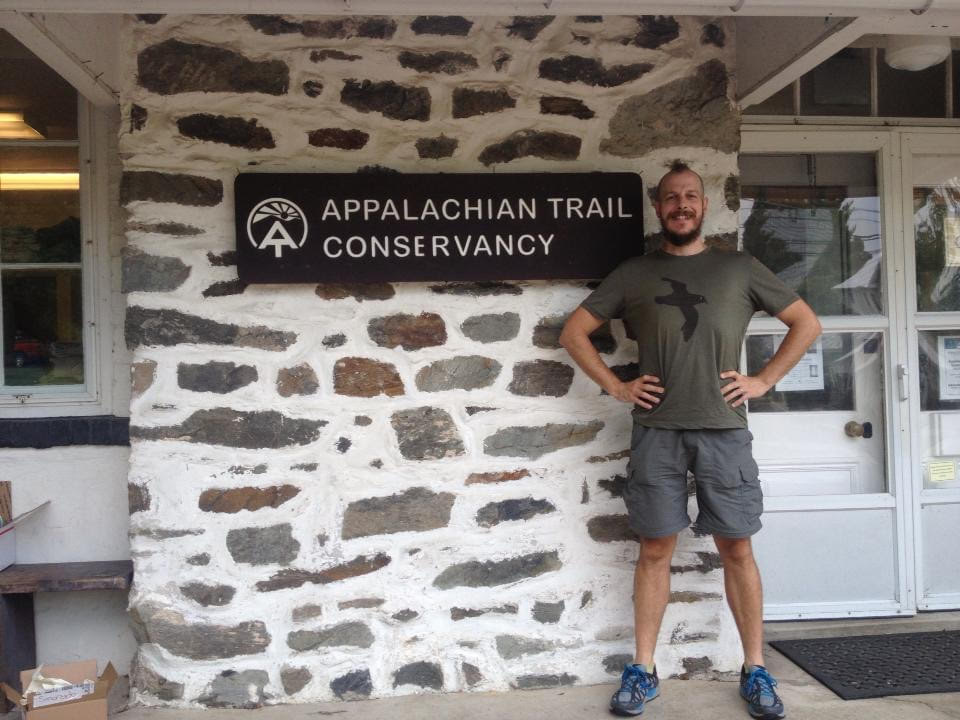
The unofficial midway point of the Trail is at
Harper’s Ferry, Virginia.
It is the site of the Appalachian Trail Conservancy HQ.
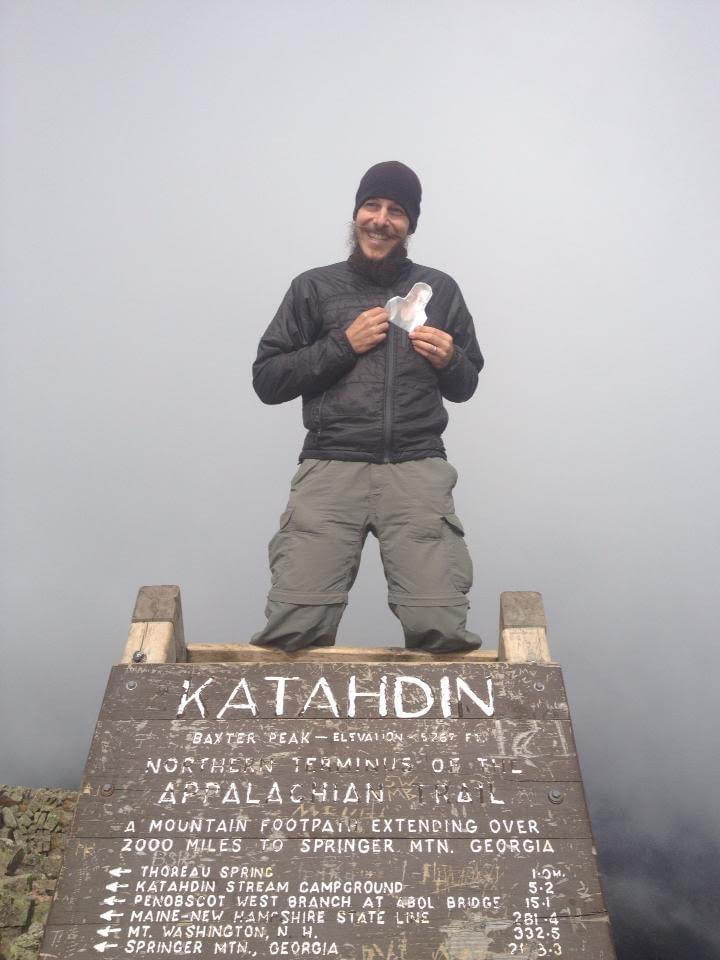
The northern terminus of the trail is at the top of Mount Katahdin in
Maine |
|
 |
|
John
Wilson and Jim O'Brien
AARP Volunteers
"What I Need to Know
About My Electric Choices”
June 2, 2026
 On
June 2, some 39 Y’s Men of Meriden attended the weekly meeting with
speakers John Wilson (AARP Connecticut Volunteer State President) and
Jim O’Brien (AARP Volunteer) discussing “What I Need to Know About My
Electric Choices”, backed by a PowerPoint slideshow. During the program,
Wilson noted that the AARP Bulletin is sent to some 38 million
subscribers, making it one of the top publications in the country. On
June 2, some 39 Y’s Men of Meriden attended the weekly meeting with
speakers John Wilson (AARP Connecticut Volunteer State President) and
Jim O’Brien (AARP Volunteer) discussing “What I Need to Know About My
Electric Choices”, backed by a PowerPoint slideshow. During the program,
Wilson noted that the AARP Bulletin is sent to some 38 million
subscribers, making it one of the top publications in the country.
In 1988, Connecticut forced all electric utilities
to sell their facilities, resulting in deregulation. Consumers since
have had the option of staying with Eversource or United Illuminating,
or switching to another utility company. There are no cancellation or
early termination fees charged to the consumer.
There are four parts contributing to your
electricity charge:
1, Generation of power
2. Transmission of the electricity (this part is regulated by the U.S.
Government)
3. Local Delivery (controlled by CT Public Utilities Regulatory
Authority)
4. Public benefits (to offset charges for folks who cannot afford to pay
for their electrical use [25%], as well as helping to pay for items like
the Millstone Power Plant [75%])
Utility rates are adjusted twice yearly in CT (January 1 and July 1).
Wilson and O’Brien strongly advised homeowners to
have an energy audit of their houses (if not already done), pointing out
multiple areas of potential savings. And they noted that if you wish to
pay less for your electrical usage, you will benefit by frequently
checking rates quoted by the different Power Generators, and switching
when better pricing becomes available.
 |
|
|
|
Janet
Cunningham
Owner and Tour Guide of
Wanderlust Ecotours
"Estuaries
to Uplands:
The Natural History of Connecticut's Tidal Ecosystems"
May 26, 2026
 Thirty-three
Y’s Men of Meriden, just returned from the Memorial Day holiday, were
treated to a slide presentation on May 26 by Janet Cunningham about the
history of Connecticut’s ecology. Cunningham, a Wallingford resident and
a former Earth Science teacher, currently is the Owner and Tour Guide
for Wanderlust Ecotours (found at
https://www.wanderlustecotours.com/) which provides Guided Kayaking
Tours of Connecticut's Ecosystems. Thirty-three
Y’s Men of Meriden, just returned from the Memorial Day holiday, were
treated to a slide presentation on May 26 by Janet Cunningham about the
history of Connecticut’s ecology. Cunningham, a Wallingford resident and
a former Earth Science teacher, currently is the Owner and Tour Guide
for Wanderlust Ecotours (found at
https://www.wanderlustecotours.com/) which provides Guided Kayaking
Tours of Connecticut's Ecosystems.
She first noted that Long Island Sound is an
estuary (an arm of the sea at the lower end of a river) with the
Connecticut River (beginning in Canada and flowing for 410 miles)
providing 70 percent of its water. She then proceeded to trace the
ecological history of Long Island Sound, noting that it was covered by a
mile-thick glacier 22,000 years ago. But by 8000 years ago, the sound
was fully marine, and sea level rising ended about 5000 years ago, with
progressive brackish transition and salt marsh formation.
Today salt marshes thrive in the Sound, resulting
in a profusion of life. Birds abound, especially Salt Marsh Swallows; in
addition, about a half-million Tree Swallows congregate here before
flying south during September and October. Eagles and Ospreys also
thrive here. Vegetation such as cottonwood trees now flourish here. And
the salt marshes provide a welcoming home for crabs, fish, beaver,
muskrats and turtles.


At around 5,000 years ago, rising sea level slowed enough
for the formation of brackish marshes |
|
|
|
Phil Callan
Former radio announcer and
club member
"Vignettes
from the Past"
May 19, 2026
Replacing a presentation on Panama by an ailing
Dave Grodzicki who had to cancel his talk the preceding evening due to
illness, club member Phil Callan with several hours’ notice provided a
program on DVDs on May 19 to 32 attending Y’s Men.
First up was a medley of song and dance routines,
especially featuring Fred Astaire, Bing Crosby and Billy DeWolfe
performing “Blue Skies, Shining On Me,…”. And then “Putting On the Ritz”
with Fred Astaire showcasing a remarkable tap dance routine.
Prohibition in America inspired ”I’ll See You In
C-U-B-A” (where alcohol was available) starring Bing Crosby. Other DVDs
depicted famous numbers including “A Couple of Song and Dance Men”
featuring Fred Astaire and Bing Crosby, “The Memphis Blues” performed by
Brian Donleavy and Jack Teagarden, and “Wait ‘Till the Sun Shines,
Nellie” with Mary Martin and Bing Crosby.

Fred Astaire

Bing Crosby

Mary Martin |
|
|
|
Jack and Barbara
Brooks
National Park travelers
"National Parks and
Missions in California"
May 12, 2026
 Travel
with us to California to see two National Parks, a National Monument,
and a National Seashore. We’ll see one of the largest gatherings of
elephant seals on the California coast. Travel
with us to California to see two National Parks, a National Monument,
and a National Seashore. We’ll see one of the largest gatherings of
elephant seals on the California coast.
The trip will also include five of the old
Spanish Missions, with unique stories behind each of them, and how most
are utilized differently today.
The presentation will conclude with a
10-minute slide show of pictures of the 51 National Parks that have been
visited by Barbara & Jack.

Big Sur,
California coastline

Elephant seals, Vista Point,
San Simeon, CA

Point Montara lighthouse, Montara, CA |
|
|
|
Cathryn Prince
Author
"For
the Love of Labor: The Life of Pauline Newman"
May 5, 2026
 Twenty-eight
Y’s Men of Meriden heard an illustrated presentation on May 5 by author
Cathryn Prince regarding her newest book “For the Love of Labor: The
Life of Pauline Newman”. This narrative traced the origin of the
International Ladies’ Garment Workers Union (ILGWU) in the early 1900s,
the first large labor union in America powered into existence by a
woman. Twenty-eight
Y’s Men of Meriden heard an illustrated presentation on May 5 by author
Cathryn Prince regarding her newest book “For the Love of Labor: The
Life of Pauline Newman”. This narrative traced the origin of the
International Ladies’ Garment Workers Union (ILGWU) in the early 1900s,
the first large labor union in America powered into existence by a
woman.
Newman was born into a poor family in Lithuania in
the late 1800s (the exact date is unknown) and was denied public
education because of her Jewish heritage, although she was eventually
allowed to go to a boys’ school run by her father where she was allowed
to “attend but not participate”. But tens of millions of Jewish
immigrants came to America during the period 1870-1920 and Newman, then
age nine, was among them, being separated from her mother at Ellis
island to live with her older brother who already resided in New York
City. She immediately had to seek work; jobs were plentiful (e.g.
clothing sweatshops or hand-rolling cigarettes), but paid little (e.g.
35 cents/day), required long hours (dawn to dusk), and all while working
in squalor.
But a thirst for education led her to study the
English language, and she was reading fiction by Charles Dickens by her
teens and soon began writing. And an activist characteristic within
asserted itself, causing her to lead a renters’ strike by 400 people at
age 16 y/o and earning her the title “East Side Joan of Arc” in the N.
Y. Times in 1907; this action became the precursor to rent control. In
1909, the first general strike in a women’s garment factory was
mobilized by Newman; at that time, women and children made up the great
majority of workers, but management remained fixed in male hands.
Workers received lower pay than men in comparable positions and had no
tenure, often working 70-80 hours weekly. Striking women were often
beaten by police and sometimes imprisoned. But the ILGWU ultimately
prevailed, providing many benefits for women in the industry.
Overcoming sexism in the public, Newman soon became
a driving force for voting rights for women, as well as organizing
health care workers. She became a lifelong partner of Freida Miller
(whom she met in 1910 and who also was a labor activist). And Newman
became a close friend of Eleanor Roosevelt, another champion of women’s
rights. In the end, Newman’s greatest characteristic was her “grit”,
developed by age 16 on the picket line.

Pauline Newman, sometime in 1911

Child laborers working in a Lower East
Side sweatshop

Women who were arrested for striking were
often made to wear signs labeling them as prisoners |
|
|